
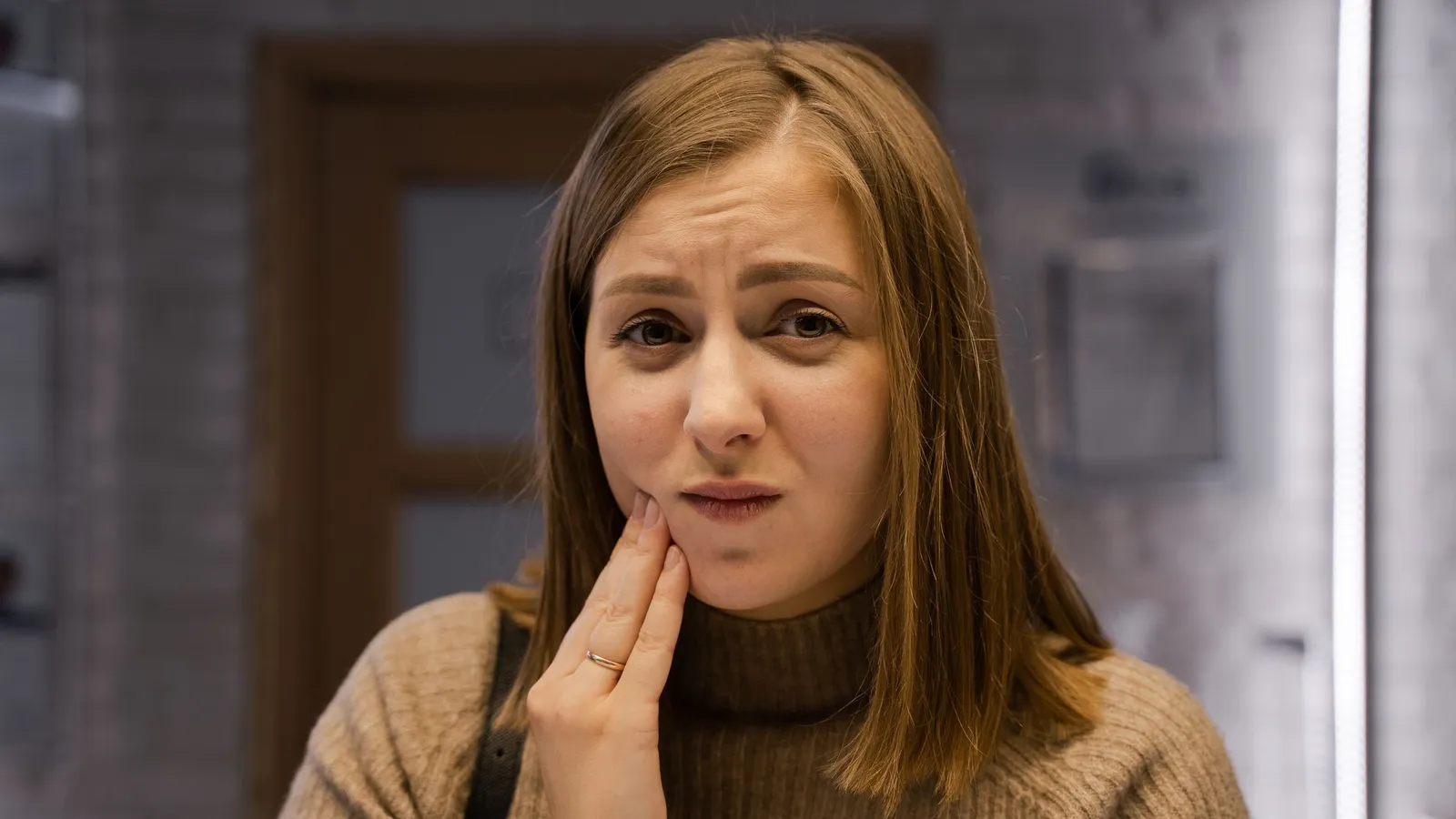
Dental Emergencies
Is a Toothache a Dental Emergency? When to Call and What to Do
How to tell whether tooth pain can wait, what to do at home in the meantime, and why a toothache you’ve been putting up with is worth a call sooner rather than later.
Most people who grind their teeth do it in their sleep and don’t find out until the damage shows. Here are the signs to look for, and what protects your teeth.

If you wake up most mornings with a sore jaw or a dull headache, it’s easy to blame the pillow, the week you’re having, or not enough coffee. For a lot of adults, the real cause is something they’ve never noticed: grinding or clenching their teeth in their sleep.
Most people who grind have no idea they do it until the damage shows up. That’s the part worth knowing about, because the damage is permanent and the protection is simple.
You’re asleep when it happens, so you have to go by the signs it leaves behind. Common ones are:
You don’t need all of these, and you may not have noticed any of them. Dr. Gifford can often identify grinding from the wear patterns on your teeth during a routine exam, before you’ve felt anything at all.
Grinding, which dentists call bruxism, is often related to stress, sleep patterns or the way your bite fits together. It isn’t a habit you can simply decide to stop, because it happens while you’re asleep.
Enamel doesn’t grow back. Years of nightly grinding flatten the biting surfaces, thin the enamel and can crack teeth outright, and every bit of that is permanent.
It also takes a toll on dental work you’ve already paid for. Grinding forces are a common reason restorations chip or come loose earlier than they should:
The difficulty is that none of this hurts while it’s happening. Wear builds up slowly and quietly, which is why it tends to be found late, when a tooth chips or starts to ache. The earlier it’s spotted, the more of your own enamel there is left to protect.
A night guard is a thin, removable cover worn over your teeth while you sleep. It puts a protective layer between your upper and lower teeth, so the wear happens to the guard instead. A guard is far cheaper to replace than a tooth.
It’s worth being clear about what a guard does and doesn’t do. It doesn’t stop the grinding itself. What it does is redirect the damage onto the guard, and it often reduces the muscle soreness that comes with clenching. Many patients find the morning jaw soreness and headaches improve once their jaw muscles aren’t working through the night.
Pharmacies sell boil-and-bite guards, and they’re a fair question to ask about. The difference comes down to fit and durability.
A custom guard is made from an impression or scan of your teeth. It’s thinner where it can be and thicker where it needs to be, it stays in place through the night, and it’s made from material that stands up to sustained grinding. Store-bought guards are bulkier and wear through faster. The most common problem with them is that they’re uncomfortable enough that people stop wearing them, and a guard in a drawer protects nothing.
Getting a custom guard is straightforward: we take the impression or scan, the guard is made to fit your bite, and at a follow-up visit we check the fit and adjust it so it sits comfortably.
Rinse it each morning, brush it gently, and keep it in its case away from heat. Bring it with you to your checkups so we can look at it; how a guard wears tells us a lot about how hard you’re grinding. How long one lasts depends on that. Some last several years, while heavy grinders wear through one much faster, and we’ll tell you when yours needs replacing.
Mention it at your next cleaning and exam, or call Flossed Family Dentistry at (480) 581-7681 to have it looked at sooner. You can also request an appointment online. Grinding leaves signs we can spot, and it’s much easier to protect a tooth than to repair one.
This article is general information, not a diagnosis or a treatment recommendation. Every mouth is different, so please talk to your dentist about your own situation.
Dental Emergencies
How to tell whether tooth pain can wait, what to do at home in the meantime, and why a toothache you’ve been putting up with is worth a call sooner rather than later.

Dental Anxiety
Practical ways to make a dental visit feel manageable, and an honest look at how nitrous oxide and oral conscious sedation can help when reassurance isn’t enough.